
American 250
Formation & the Founding Vision for Education
As the United States approaches its 250th anniversary, this series explores a question often overlooked: how did the founding generation understand education?
For many of the founders, education was not primarily about institutions or credentials, but about formation — the shaping of character, conscience, and civic virtue. Through brief historical reels, we revisit their assumptions about learning, family, and moral formation, and consider what they might still teach us today.
This series presents historically grounded but interpretive reflections on selected figures of the founding era. It does not attempt to represent the full range of views held by the founders or to offer a comprehensive history of education in early America.
Rather, the project explores recurring themes related to formation, moral vision, and civic responsibility, drawing on primary sources to consider how these ideas continue to inform contemporary conversations about education and culture.
How the Founders Framed Education
The founders frequently spoke of education as essential to the survival of a republic and therefore a matter of public concern. Yet their understanding of this responsibility differed significantly from modern assumptions. They consistently located the primary work of formation in families, religious communities, and the shared moral culture of society, with schools and public structures serving a reinforcing rather than a replacing role.
In this view, the state could support education, but it could not manufacture virtue. The habits of self-government necessary for liberty were believed to arise first within households and communities, then be strengthened through learning.
Recognizing this distinction helps clarify the purpose of this series: not to advocate a particular educational model, but to explore how the founding generation connected formation, character, and freedom within a broader ecology of institutions.
Featured Reels

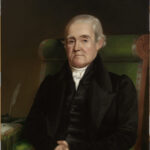
Noah Webster
“The instructors of youth ought, of all men, to be the most prudent, accomplished, agreeable and respectable. The pernicious effects of bad example on the minds of youth will probably be acknowledged.”
— Noah Webster, On the Education of Youth in America (1788)

Abigail Adams
“If you complain of neglect of education in sons, what shall I say with regard to daughters, who every day experience the want of it… If we mean to have heroes, statesmen, and philosophers, we should have learned women.”
— Abigail Adams, Letter to John Adams, August 14, 1776

Benjamin Rush
Benjamin Rush understood education as the cultivation of moral and civic character, not merely the transmission of knowledge. This brief explores his vision of early formation rooted in Scripture, the family, and the shaping of virtuous citizens—offering insight into how America’s founders understood the relationship between education and the republic.
Freedom depends not only on institutions, but on formed citizens.
Revisiting the founding generation’s reflections on education invites us to consider anew how character, faith, and learning belong together.